How to Play Online Slots in the UK
Last updated: 24 March 2026
This guide explains the essentials of playing slots in the UK, from choosing a licensed site to understanding payments, RTP, and safer gambling tools. It is designed as a practical starting point whether you want to try demo slots first or play for real money.
UK licences – where you can play slots legally

The safest starting point for UK players is a site licensed by the UK Gambling Commission (UKGC). Operators serving Great Britain should make their regulatory status clear, because that licence underpins game fairness checks, complaint handling, and the safer-gambling tools available to customers.
UKGC oversight is important because it affects how slot products are offered and how operators must behave. Licensed sites are expected to use tested random number generators, publish key game information such as RTP where available, and provide practical controls including deposit limits, cooling-off periods, and self-exclusion options.
Regulation can vary depending on where you are located, so it is worth checking the rules that apply to your jurisdiction before registering. As a general rule, British players should stick with clearly regulated operators rather than chasing offshore sites that may promise more but offer less protection.
Types of slots you can play in the UK
Online slot lobbies can look overwhelming at first, but most games fall into a handful of recognisable categories. Understanding the differences helps you decide what kind of bankroll, pace, and feature set suits you best.
Classic slots (fruit machines)
Classic slots tend to use three reels, familiar symbols, and a simpler structure than most modern releases. They appeal to players who want a straightforward spin cycle without long feature chains or highly animated bonus rounds.
Video slots
Video slots are the standard format at most UK-facing casinos. They usually come with five reels, larger feature sets, themed visuals, and mechanics such as scatters, wilds, free spins, or cascading wins. This is where most of the variety in a modern lobby will be found.
Megaways slots
Megaways titles vary the number of symbols on each reel from spin to spin, which creates a shifting number of winning paths. They are popular because sessions can feel dynamic, but they are often more volatile and can swing harder than standard video slots.
Progressive jackpot slots
Progressive jackpot slots build prize pools over time, either across one game or a wider network. The attraction is obvious, but these games may behave differently from standard slots, so it is worth checking the prize rules, RTP, and any eligibility conditions before staking heavily.
Branded and licensed slots
Branded slots borrow themes from television, films, music, or recognisable franchises. The licence adds familiarity, but you should still judge the game by its mechanics, volatility, and payout profile rather than the theme alone.
How to play slots in the UK – step by step
Most players follow the same broad path: choose a site, register, decide whether to test in demo mode, set a budget, and only then move into real-money play. The steps below keep that process simple.
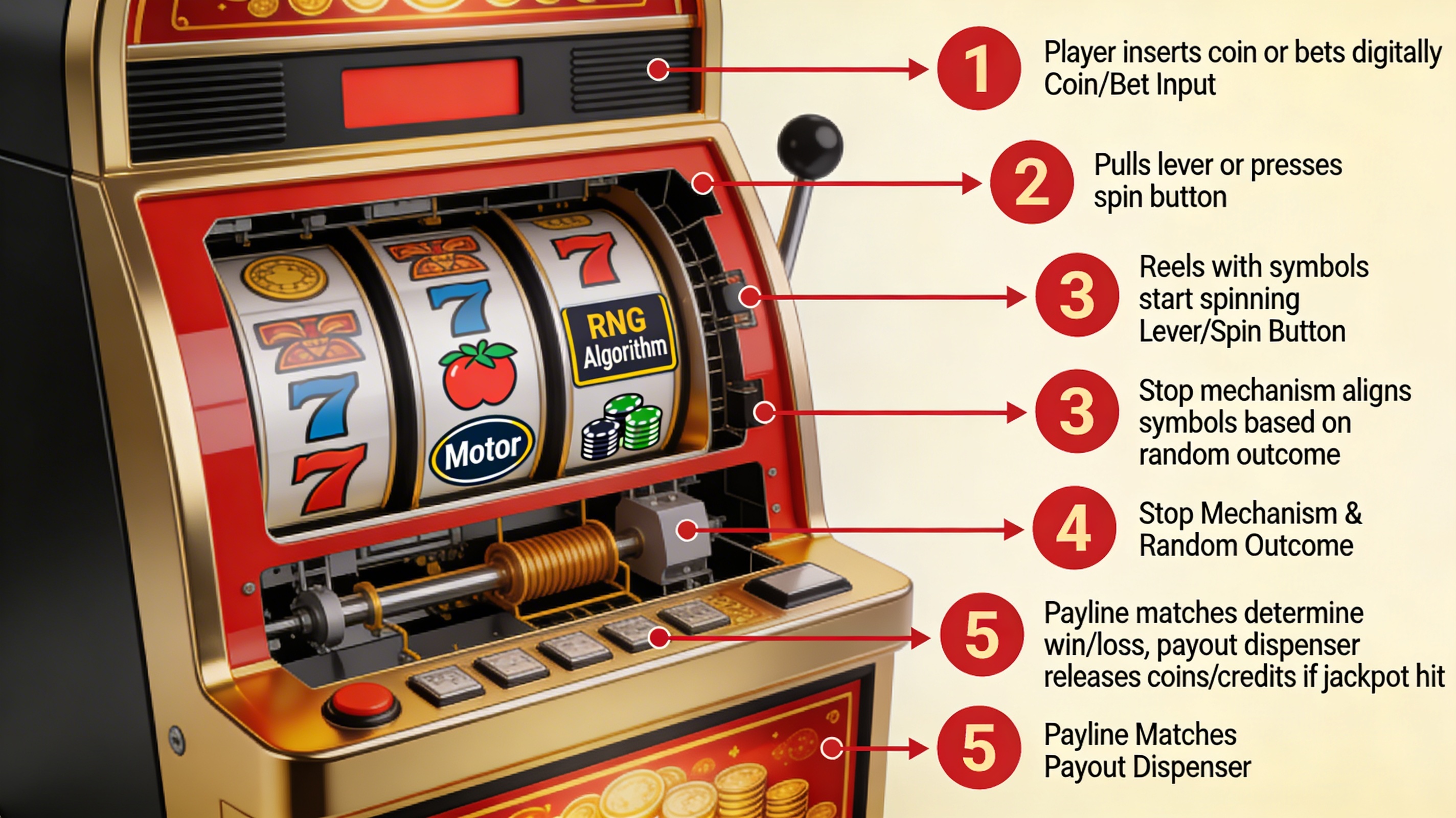
- 1
Pick a UKGC-licensed site
Start with an operator that clearly explains its regulation, support options, and player tools. If the site is vague about any of those basics, it is not a good place to deposit.
- 2
Register and verify
Enter accurate details and expect identity checks before your first withdrawal. Getting this right early can prevent unnecessary friction once you are ready to cash out.
- 3
Play in demo mode first (optional)
If demo mode is available, use it to get comfortable with the rules, pacing, and feature triggers. It is one of the easiest ways to test whether a game suits you before using real funds.
- 4
Deposit and set limits
Choose a payment method you trust and set deposit or time limits before the session starts. That keeps the budget visible and makes it easier to stop when you planned to.
- 5
Choose a slot and play
Pick a stake level that fits your bankroll, check the paytable, and understand what features are in play. Slots can feel very different even at similar RTP levels, so it helps to choose deliberately rather than randomly.
Payments to play slots – deposits
Real-money slot play starts with the cashier, so it is worth understanding how common payment routes differ. Speed, convenience, and withdrawal compatibility can matter as much as the initial deposit itself.




Debit cards (Visa, Mastercard) remain one of the most familiar options. Deposits are usually immediate, but withdrawals can take longer than e-wallets. For many players, cards are the simplest route because they are easy to track through normal banking statements.
E-wallets and wallet-based methods are often chosen for convenience and, in many cases, quicker cashouts. They can also make budgeting easier by creating an extra layer between the casino and your main bank account, although bonus eligibility should still be checked first.
Bank transfer and alternative methods can suit players who prefer a direct banking route or prepaid control. Processing times vary by operator, so always check the cashier page rather than assuming all methods will behave the same way.
Payouts and withdrawals when you play slots
Withdrawals are where the difference between a slick casino and a frustrating one becomes obvious. Timelines vary, but e-wallet routes are often quicker, while card and bank payouts can take longer depending on the operator and verification stage.
Before a first cashout, many sites will ask for ID and address documents. That is standard. It is also worth checking whether the bonus you used still has open wagering, whether there is a pending period before processing starts, and whether the operator applies daily or monthly limits.
RTP gives a long-run theoretical return rather than a promise for any single session. Volatility matters just as much in practice because it shapes how the game feels while you are playing. Choosing games that match both your budget and your tolerance for swings is usually smarter than chasing hype alone.
Risks and responsible play when you play slots UK
Slots are designed as paid entertainment, which means losses are always part of the experience when real money is involved. Outcomes are random, the house has an edge over time, and chasing a bad session rarely improves it.

Gambling harm can affect anyone, even when play starts casually. If gambling is becoming stressful, secretive, or harder to control, use site tools such as deposit limits, reminders, or self-exclusion. You can also use GamStop for wider self-exclusion across participating UK operators, and support services like BeGambleAware, GambleAware and GamCare are available free of charge.
Bonus terms are another common risk area. Wagering, expiry windows, game restrictions, and max-bet rules can all affect whether bonus winnings become withdrawable. Reading the terms first is the simplest way to avoid that frustration.
Unlicensed operators can also create unnecessary risk around both money and personal data. Sticking to clearly regulated casinos is usually the easiest way to avoid disputes you may struggle to resolve later.
FAQ – play slots UK
Quick answers to common questions about how to play slots in the UK.
Is it legal to play online slots in the UK?
Can I play slots for free in the UK?
What is RTP and why does it matter when I play slots?
How old do I need to be to play slots in the UK?
Can I play slots on my phone in the UK?
What payment methods can I use to play slots?
About the author

Victoria Blake
Victoria Blake is a UK casino affiliate expert specialising in slot promotions, site reliability, and bonus optimisation. She reviews platforms with an eye for high-conversion offers and shares actionable insights for players and affiliates alike.
Ready to play slots?
Use our comparisons to shortlist a site, check the terms, and start with a setup that matches your budget and preferred way to play.